€10 — Ten Euros
The artwork
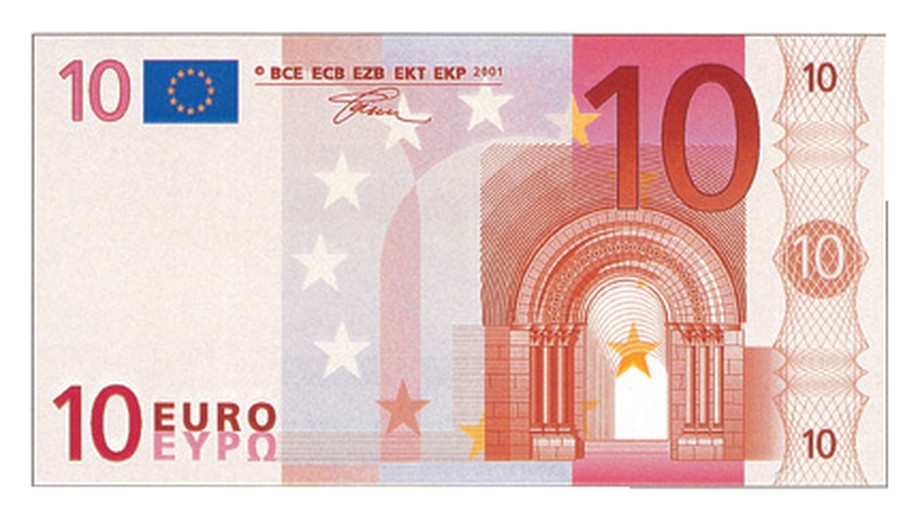
Front: A Romanesque round-arched portal, drawn in warm terracotta line-work, occupies the right half — the doorway motif standing for the first of the architectural ages that run through the series, with a gold star glowing in the opening. To the left, twelve white stars of the European flag and, across the top, the issuing bank's initials in five alphabets: BCE ECB EZB EKT EKP, dated 2001, with the President's signature beneath. Denomination in figures at the corners and spelled EURO / ΕΥΡΩ below.
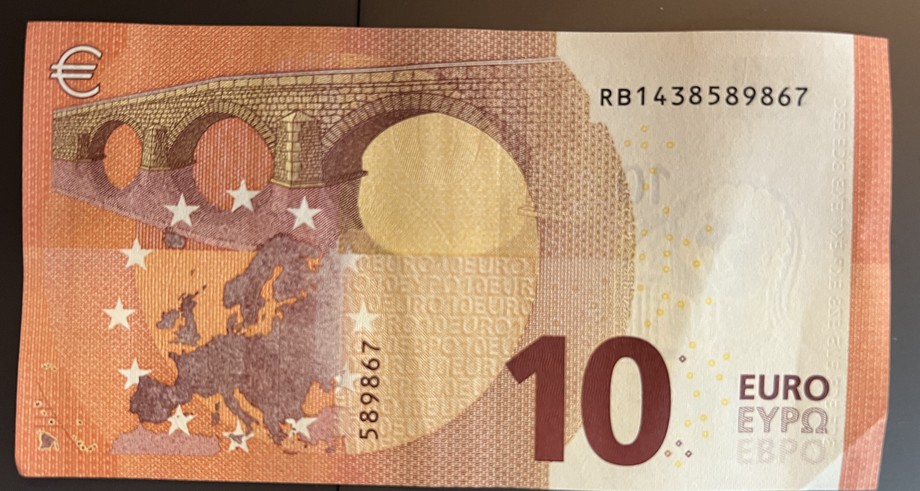
Back: The complementary half of the design: a Romanesque bridge spanning open water, again in red and terracotta, the arches echoing the portal on the face. Behind it a map of Europe, the continent shown without borders, and above the whole a scatter of the twelve stars. The value appears large at both sides, with EURO and ΕΥΡΩ across the top. No real bridge — the structures are deliberately invented so no member state is favoured.
In circulation
Part of the first euro series, put into circulation on 1 January 2002 as the single currency replaced twelve national currencies in cash. It was superseded by the second, "Europa" series ten, issued 23 September 2014, after which this design was gradually withdrawn from tills — though it remains legal tender indefinitely.
Details
- CurrencyEuro (€)
- DenominationTen Euros
- IssuerEuropean Central Bank — printed BCE ECB EZB EKT EKP
- SeriesFirst series, "Ages and Styles of Europe"; dated 2001
- SignatureWillem F. Duisenberg, President of the ECB
- SecurityHolographic foil stripe at the right of the face; iridescent band on the back
- Dimensions127 × 67 mm
See also
Euro is in the collection for its banknotes; its photographs and journal have not been added yet.