€20 — Twenty Euros
The artwork
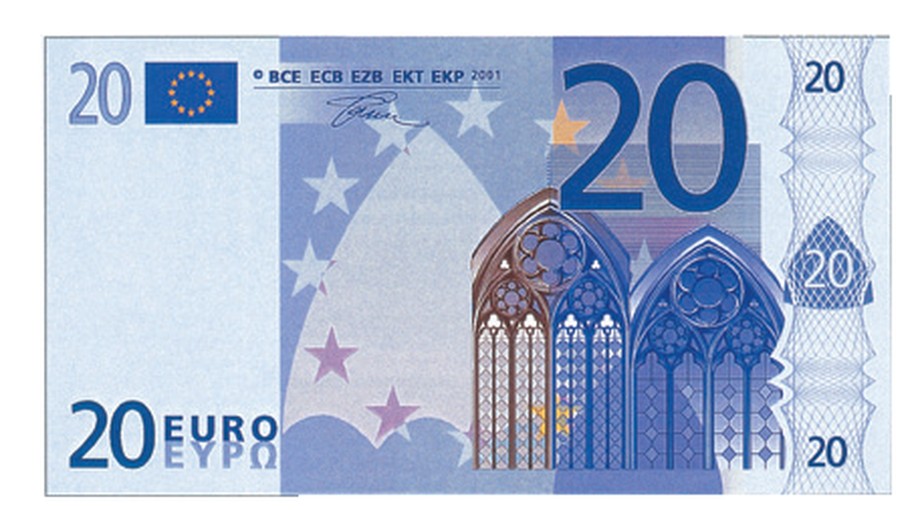
Front: A Gothic window — the arched, traceried lights of the thirteenth and fourteenth centuries — standing for the third of the seven architectural ages that carry the series. No real building: the architecture is deliberately invented so no member state can claim it. Above, the EU flag, the issuer's name in five alphabets, the 2001 copyright and the President's signature; a holographic stripe runs down the right edge. Denomination as EURO and ΕΥΡΩ.
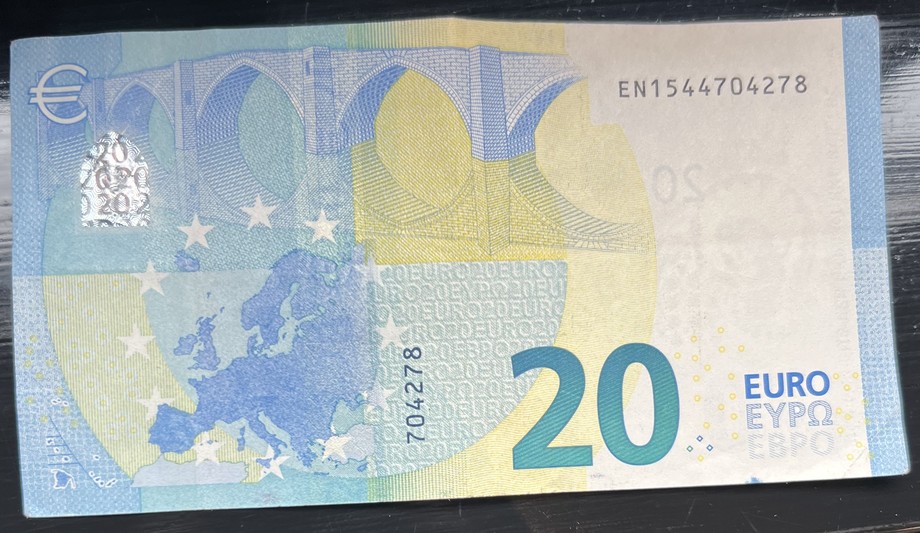
Back: A Gothic bridge in the same imagined idiom, spanning open water — the bridge motif runs through every denomination as a plain metaphor for links between Europe's peoples. Behind it, the outline map of Europe in blue, with the overseas territories set out separately, and the large numeral 20 repeated with EURO and ΕΥΡΩ. The twelve stars are scattered across the field.
In circulation
Issued on 1 January 2002 with the first euro cash changeover, and printed for well over a decade. Superseded by the Europa series 20, released 25 November 2015, which added the portrait watermark and the green emerald numeral. First-series notes are no longer issued but remain legal tender without limit.
Details
- CurrencyEuro (€)
- DenominationTwenty Euros
- IssuerEuropean Central Bank — printed as BCE ECB EZB EKT EKP
- SeriesFirst series, dated 2001
- SignaturePresident of the European Central Bank
- SecurityHolographic stripe at the right edge of the front
- Dimensions133 × 72 mm
See also
Euro is in the collection for its banknotes; its photographs and journal have not been added yet.