€50 — Fifty Euros
The artwork
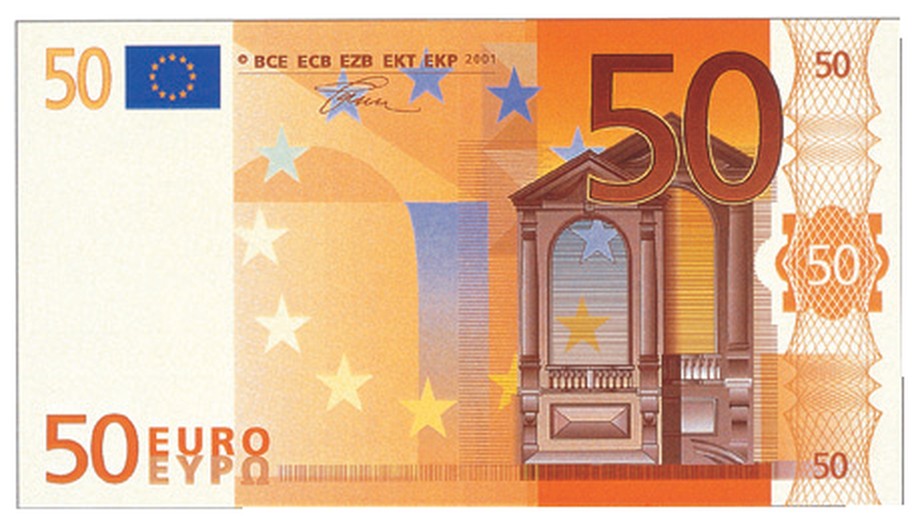
Front: Renaissance architecture, the theme of the 50: an arched window with a pedimented aloft, columns and a balustrade, rendered in orange and brown. Like every euro building, it is an invented composite rather than a real place, so no member state can claim it. Left of centre, the twelve stars in a flag panel, the ECB's initials in five language versions — BCE ECB EZB EKT EKP — and the President's signature.
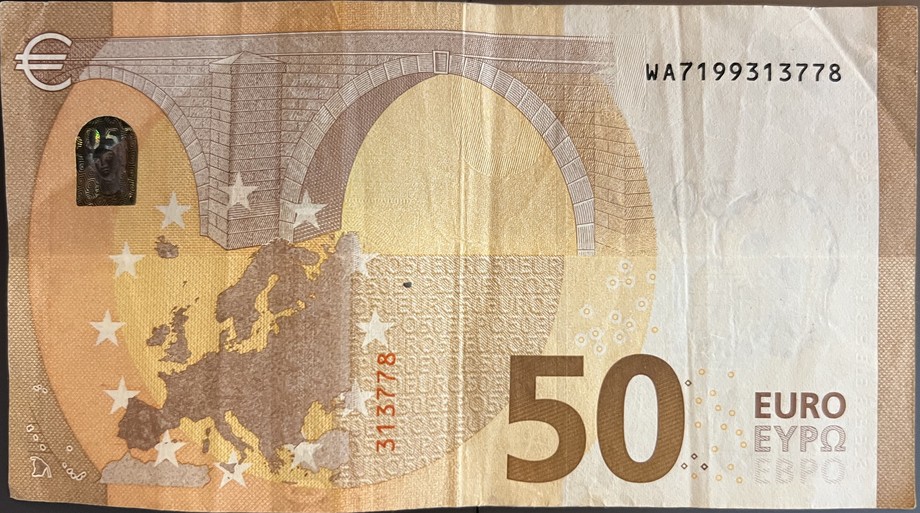
Back: The reverse keeps to the same Renaissance grammar: a bridge in several arches spanning open water, the counterpart to the front's window, standing for the links between Europe's peoples and with the wider world. Behind it a map of the continent in outline, the twelve stars again, large orange 50s, and the word for the currency in both Latin and Greek script, EURO and ΕΥΡΩ.
In circulation
The first euro series went into pockets on 1 January 2002, the largest cash changeover ever attempted. A redesigned 50, part of the Europa series with its portrait watermark, appeared on 4 April 2017, after which this design was no longer issued — though first-series notes keep their full legal tender value indefinitely.
Details
- CurrencyEuro (€)
- DenominationFifty Euros
- IssuerEuropean Central Bank — BCE ECB EZB EKT EKP
- SeriesFirst series (1st series euro), Renaissance architecture
- SignaturePresident of the European Central Bank
- SecurityHolographic patch, colour-shifting number on the reverse, security thread
- Dimensions140 × 77 mm
See also
Euro is in the collection for its banknotes; its photographs and journal have not been added yet.